Leave Your Message
Buying Long Boxes wholesale in 2026 isn’t just about comparing unit prices. You’ve also got to look at dimensions, board strength, closure style, print quality, and how efficiently the boxes ship. A box that seems cheap up front can get expensive fast once you factor in oversized freight, damaged products, or warehouse space it hogs.
David Luttenberger, Global Packaging Director at Mintel, calls packaging “a silent salesperson.” That’s a good point. Long Boxes protect what’s inside, sure, but they also shape shelf appeal, customer expectations, and how credible your brand feels. A clean kraft finish, sturdy edges, and accurate sizing? Those little things can make even a basic shipment feel thoughtfully put together.
So this guide walks through sourcing Long Boxes from wholesale suppliers you can actually rely on. We’ll cover material choices, minimum order quantities, custom printing, sample testing, lead times, and landed costs. You’ll also get practical questions to ask during supplier audits, like where the board comes from and how strength is tested. Small details matter—really.
And no, the process isn’t always smooth. Prices move. Production schedules slip. A supplier might promise custom work but then offer barely any proofing support. Before you place a big order, ask for physical samples. That’s especially important if your packaging is unusually narrow or extra-long.
There’s no one purchasing formula that fits every company. A small online retailer may want flexible quantities, while a manufacturer might care more about pallet pricing and repeatability. Either way, careful comparison still matters. The cheapest quote isn’t always the safest bet.

When buying long boxes wholesale in 2026, define the carton before comparing prices. “Long” has no universal measurement. Record internal length, width, and depth in millimeters. A practical starting point is a narrow box whose length greatly exceeds its width. Measure the product, then add clearance for protective material. Do not size from a product photo. Tubes, rods, framed parts, and rolled goods need different internal shapes. Leave enough space for end protection, but avoid empty volume that increases dimensional weight.
Material affects protection, cost, and disposal. Single-wall corrugated board suits lighter, stable items. Double-wall board is safer for heavier products, stacked pallets, or longer transport routes. Ask for board grade, flute profile, edge-crush results, moisture resistance, and recycled-content information. A sample box should survive sealing, handling, and a controlled drop test. In my experience, a low unit price can hide weak corners or excessive filler. I still review these assumptions; supplier test data helps, but actual packing trials reveal more.
Tips: For 2026 shipping, confirm each carrier’s maximum length, girth formula, dimensional-weight divisor, and surcharge rules. Check whether labels remain scannable on rough surfaces. Request counted bundles, dry-storage instructions, and consistent compression strength. Confirm destination-specific packaging and recycling requirements before ordering. Keep a written specification and approve a preproduction sample. Small details matter.
| Box Category | Typical Inside Size (L × W × H) |
Metric Size (Approx.) |
Recommended Material | Typical Board Grade | Suitable Product Length | Approx. Cubic Volume | Estimated Empty Weight | Wholesale Buying Use | 2026 Shipping and Packing Check |
|---|---|---|---|---|---|---|---|---|---|
| Extra-Slim Long Box | 36 × 4 × 4 in | 914 × 102 × 102 mm | Single-wall corrugated fiberboard | 32 ECT, B-flute, approximately 3 mm thick | Up to 34 in | 0.33 ft³ | 0.35–0.50 lb | Posters, rods, trim pieces, narrow components, and lightweight tools |
Parcel-friendly Use end protection to prevent puncture damage. The narrow profile can be vulnerable to crushing if stacked beneath heavier cartons. |
| Standard Long Box | 48 × 6 × 6 in | 1,219 × 152 × 152 mm | Single-wall corrugated fiberboard | 32 ECT, C-flute, approximately 4.0 mm thick | Up to 46 in | 1.00 ft³ | 0.85–1.20 lb | Rolled artwork, curtain rods, sports equipment, and long replacement parts |
Common wholesale size Seal the manufacturer’s joint and all end flaps with pressure-sensitive or water-activated tape. |
| Medium Heavy-Duty Long Box | 60 × 8 × 8 in | 1,524 × 203 × 203 mm | Single-wall or reinforced single-wall corrugated fiberboard | 44 ECT, C-flute, approximately 4.0 mm thick | Up to 58 in | 2.22 ft³ | 1.50–2.10 lb | Flooring samples, lighting parts, fishing rods, tubing, and long hardware |
Dimensional weight may apply Compare actual weight with the carrier’s 2026 dimensional-weight calculation before selecting parcel service. |
| Large Long Box | 72 × 8 × 8 in | 1,829 × 203 × 203 mm | Reinforced single-wall or double-wall corrugated fiberboard | 44 ECT single-wall or 48 ECT double-wall | Up to 70 in | 2.67 ft³ | 2.00–3.20 lb | Long décor, instrument cases, rails, furniture components, and industrial parts |
Oversize screening recommended Measure the sealed outside carton. Length-and-girth limits vary by carrier and service level in 2026. |
| Extra-Long Protective Box | 96 × 8 × 8 in | 2,438 × 203 × 203 mm | Double-wall corrugated fiberboard | 48 ECT or stronger, BC-flute, approximately 6–7 mm thick | Up to 94 in | 3.56 ft³ | 3.00–4.80 lb | Long metal sections, architectural components, premium artwork, and fragile assemblies |
Carrier acceptance must be verified Use corner protection and internal blocking. Some parcel services apply oversize, additional-handling, or non-conveyable surcharges. |
| Heavy Industrial Long Box | 96 × 12 × 12 in | 2,438 × 305 × 305 mm | Double-wall corrugated fiberboard with internal bracing | 51 ECT or stronger, BC-flute | Up to 94 in | 8.00 ft³ | 6.00–9.00 lb | Dense machine parts, long tools, metal profiles, and multiple-item wholesale kits |
Freight may be more economical Request a parcel-versus-LTL comparison. Use a pallet when the carton is heavy, unstable, or difficult to handle safely. |
| Telescoping Two-Piece Box | Adjustable length × 6 × 6 in Typically 48–96 in |
Adjustable length × 152 × 152 mm | Two interlocking corrugated sections | 32–44 ECT, C-flute; double-wall for heavy contents | Variable; trim or overlap to fit | Variable | 1.50–4.00 lb | Mixed-length products, returnable packaging, and inventory with variable dimensions |
Reduces void space Maintain sufficient overlap between sections and reinforce the telescoping seam with full-length tape. |
| Triangular Mailing Box | 36 × 6 × 6 in Triangular cross-section |
914 × 152 × 152 mm | Single-wall corrugated fiberboard | 32 ECT, B- or C-flute | Up to 34 in | Approximately 0.31 ft³ | 0.45–0.75 lb | Posters, prints, banners, maps, and rolled documents |
Good anti-roll design Confirm that the carrier accepts the triangular profile and apply labels to the largest flat panel. |
| Flat-Pack Long Box | 48 × 12 × 3 in | 1,219 × 305 × 76 mm | Single-wall corrugated fiberboard with rigid inserts | 32 ECT, E-flute or B-flute | Up to 46 in | 1.00 ft³ | 0.90–1.40 lb | Panels, signs, framed items, thin hardware, and flat-pack components |
Efficient for flat products Add a rigid pad when the contents can bend. Avoid excess empty space that permits panel movement. |
| Custom Long Box | Made to product dimensions | Specified in millimeters or inches | Corrugated fiberboard selected for product weight and handling risk | 32, 44, 48, or 51 ECT; single- or double-wall | Product length plus protective clearance | Calculated from finished inside dimensions | Depends on board and structure | Best for repeat wholesale orders, high-value goods, and reduced dimensional-weight exposure |
Most material-efficient Provide inside dimensions, outside dimensions, product weight, drop-test requirements, print needs, and target order quantity in the RFQ. |
Measurement note: Box dimensions in this table are nominal inside dimensions; actual dimensions can vary by converting method and board thickness. ECT means Edge Crush Test and indicates stacking strength, not puncture resistance. For 2026 shipments, calculate billable weight using the greater of actual weight and the carrier’s dimensional weight, then verify the current carrier limits, oversize rules, length-and-girth limits, additional-handling fees, and non-conveyable-item requirements before placing a wholesale order.
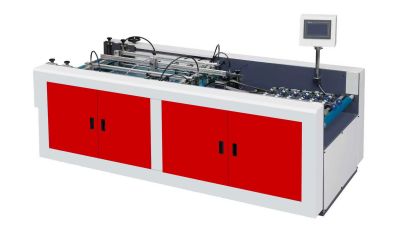
The DH-900 Linear Leather Shell is engineered for precision four-side wrapping in premium rigid box manufacturing. Designed for China-based packaging suppliers and factories, this advanced case maker combines conveying and wrapping in one streamlined workflow. It supports efficient production of high-end boxes with consistent edges, clean corners, and refined surface finishes, while reducing dependence on manual labor.
Compatible with a wide range of leather, paper, fabric, and other wrapping materials, the machine uses a visual positioning system to improve alignment accuracy and minimize material waste. Its dual-station design supports stable, high-speed operation, helping manufacturers maintain reliable output across different production requirements. The intelligent control system is user-friendly, while the durable construction ensures long-term performance in demanding packaging environments. By integrating precise positioning, smooth conveying, and controlled four-side forming, the equipment helps elevate both manufacturing efficiency and the overall quality of premium rigid boxes.
Measure the packed box. Product movement can change the final dimensions. Record internal and external measurements separately.
Multiply length, width, and height. Divide the result by 139. For a 40 × 10 × 8-inch box, the result is about 23 pounds.
Multiply the three measurements in centimeters. Divide by 5,000. A 102 × 25 × 20-centimeter carton equals about 10.2 kilograms.
The carrier may use the higher figure. Compare actual weight with dimensional weight. A 12-pound box could receive a 23-pound billable weight.
List product size, internal dimensions, external dimensions, actual weight, and dimensional weight. Add carton quantity and storage space.
A tight carton may need stronger protection. Long products can shift during handling. A slightly larger box may reduce damage.
Compare minimum order quantity, production lead time, sample quality, and testing evidence. A 5,000-box order may sit for months.
Request sample cartons and a dated production schedule. Confirm material preparation, inspection, dispatch, and transport timing. Seven days may exclude weekends.
Include unit price, packaging, pickup, freight, insurance, destination handling, taxes, and final delivery. Divide total delivered spending by sellable boxes received.
Do not trust “shipping included” without a named location and clear responsibilities. I once underestimated destination charges. That error was avoidable.
Buying Long Boxes wholesale in 2026 requires more than comparing unit prices. Start by defining the required length, width, height, board material, and shipping environment. Calculate dimensional weight using the applicable carrier divisors, such as 139 for certain inch-based calculations and 5,000 for metric measurements, then compare the result with actual weight. Evaluate suppliers by minimum order quantity, lead time, production capacity, and ISTA 3A testing capability. Before placing an order, verify board performance through ECT, burst rating, and relevant ASTM D5639 data to ensure the boxes can withstand stacking, handling, and transportation.
A complete purchasing review should also examine FSC certification, recycled content, labeling, and packaging compliance. Request quotations that clearly separate product cost, freight, duties, insurance, and other landed expenses, while confirming responsibilities under Incoterms 2020. Inspect production samples for dimensions, strength, printing, and closure quality before negotiating payment terms, tolerances, inspection rights, and corrective actions. Finally, use sales forecasts, safety stock, supplier lead times, and reorder points to build a reliable 2026 inventory plan.





 Phone
 Send Email
 whatsapp
 Facebook
 Youtube