Getting the box dimensions right really can make or break your shipment’s profitability. I mean, a box might seem perfectly compact on your warehouse shelf, but that tiny extra inch can actually bump up the dimensional weight, cause you to use a bigger carton, or add some storage headaches. Did you know that in 2022, Pitney Bowes reported moving a staggering 161 billion parcels worldwide? That just goes to show how even small measurement mistakes can snowball across today’s huge shipping networks. They also predict parcel volume will keep growing through 2028, so there's even less room for sloppy estimates.
Packaging expert Lisa McTigue Pierce always reminds us — 'Packaging is a system, not just a box.' Honestly, that’s so true, especially when it comes to measuring. After you pick your box, make sure to record the inside length, width, and height. If the carrier asks for outer dimensions, then measure the outside, including flaps, bulges, tape, and any padding. Soft products or thick corner pads can easily throw off your measurements, so keep that in mind.
Most carriers like UPS and FedEx base their pricing on dimensional weight — that’s length times width times height, divided by a divisor (usually 139 for domestic shipments). But these rules and divisors can change, so it’s smart to double-check before you print your labels. The US Department of Energy also notes that smart packaging can cut down on materials and transportation impacts — but the real savings depend on the product design and shipping routes. And don’t just rely on a ruler — use a good, calibrated tape measure, take photos if something’s unusual, and jot down everything in a shared shipping sheet. Human errors happen, so reviewing your measurements is worth it. Keeping your box dimensions consistent not only makes quotes more reliable but also speeds up packing and makes shipping decisions way easier to defend.
All in all, paying close attention to box sizing might seem small, but it totally pays off in the end.
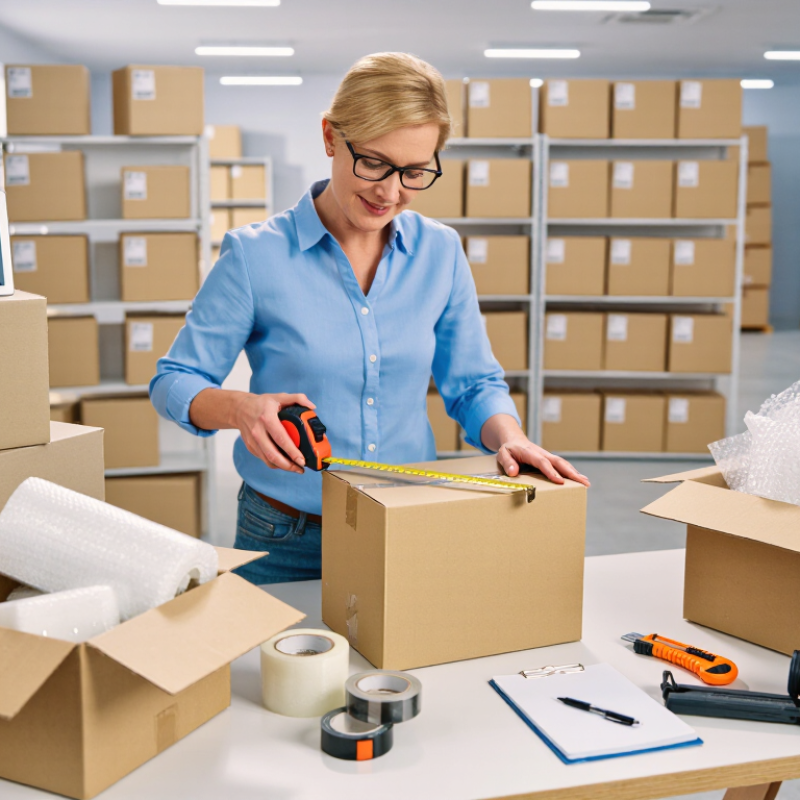
Identify the Box’s Length, Width, and Height
Accurate box measurements begin with a flat, stable surface and a rigid measuring tape. Place the empty carton upright, with the opening facing upward. Measure the longest side from left to right. This is the length. Keep the tape straight, not bowed across the cardboard.
Next, measure the shorter side from front to back. That is the width. Finally, measure from the bottom panel to the highest inside edge. This is the height. Record the dimensions in length, width, and height order. A small note helps: write them directly on the carton or invoice.
Measure the usable inside space when checking whether products will fit. Measure the outside dimensions when estimating shipping space or dimensional weight. This distinction matters. A Box Packing Box may lose several centimeters of space after protective paper or foam is added. I have seen workers measure only one side and assume the remaining sides are equal. They were not. Corners can also flare slightly, especially on reused cartons. I still recheck each measurement.
Do not press the tape into soft cardboard. That can create an inaccurate result. Check the longest points, including flaps and bulging panels, when external size matters. If the package is nearly at a size limit, measure twice and record the larger reading. It feels excessive. It prevents avoidable corrections later.
Choose the Correct Measurement Points on the Box
Choosing the correct measurement points matters more than measuring quickly.
A shipping carrier normally needs the box’s outside dimensions: length, width, and height.
Measure the longest side as length. Measure the next longest side as width. Height is the remaining side. Use the closed box, including flaps, seams, tape, and any bulging film. Do not measure the inner cavity.
Place the Box Packaging Box on a flat table. Press lightly at the widest points, but do not compress the cardboard. Keep the ruler straight from edge to edge. Measure each dimension twice. Record the larger result. A small mistake can increase dimensional weight.
The 2023 Global Parcel Shipping Index reported 161.8 billion parcels worldwide in 2022, showing how often these measurements affect shipping systems. Many networks also round fractional dimensions upward, so 30.2 centimeters may become 31 centimeters.
Check the packed carton again. Foam, paper, or uneven contents can push the panels outward. I have seen a neat empty carton measure correctly, then change after packing. That is easy to miss.
A practical method is to photograph each measurement point beside the ruler. Keep the images with the shipment record. This creates useful evidence when a charge looks unusual.
ASTM packaging standards support repeatable testing, but real cartons are rarely perfect. Recheck damaged corners, soft panels, and loose tape before entering the final numbers.
Measure Exterior Dimensions for Shipping Calculations
How to Measure Box Dimensions for Shipping?
Measure the exterior dimensions of the fully packed box, not the empty carton. Use a rigid tape measure for steadier readings. Measure the longest side from outside edge to outside edge. This is usually the length. Measure the shorter horizontal side as the width. Then measure from the bottom panel to the highest point as the height. Include bulging cardboard, raised flaps, and protective padding.
Keep the box closed during measurement. A filled box can expand slightly under pressure. Record every measurement in the same unit, such as centimeters or inches. Round up when the reading falls between marks. Small differences may affect shipping calculations. I once measured a box before adding corner protection, then had to correct all three dimensions. That mistake was avoidable.
For dimensional calculations, multiply the exterior length, width, and height. Apply the required dimensional factor for the chosen shipping service. Check its current measurement rules because factors and limits can change. Place the box on a flat floor, and keep the tape level. Photographing the measurements can support accurate records. Avoid measuring only one side. Uneven packaging can create a larger final size than expected. Recheck the packed box after sealing, especially when using soft materials that shift during handling.
How to Measure Box Dimensions for Shipping?
Measure the exterior dimensions of the fully packed box from the longest points: length, width, and height. Include the thickness of the cardboard and any protruding parts. The chart below compares representative box dimensions in centimeters.
Shipping calculation: Multiply the exterior length, width, and height to calculate cubic volume. Carriers may use either actual weight or dimensional weight, so accurate outside measurements are essential.
Account for Flaps, Seams, and Irregular Box Shapes
How to Measure Box Dimensions for Shipping?
Measure a box after assembling it, not while it lies flat. Use a rigid ruler and record the outside length, width, and height in centimeters or inches. Keep the flaps closed as they will appear during shipping. Flaps can extend beyond the side panels, especially when tape creates tension. Measure the largest point. Small differences matter.
Seams also need attention. A folded seam may form a narrow ridge, while an overlapping joint can add several millimeters. Run your fingers along each edge before measuring. For a Box Type Box with a raised lid, include the lid’s highest point. Irregular boxes require more care. Measure the widest side, the longest side, and the tallest point, even if these points are not aligned. I usually measure each dimension twice and photograph the setup. Still, human error happens. One rushed measurement once caused a carton to fit poorly inside its shipping container.
Tips: Place the box on a flat table. Press flaps gently, but do not crush them. Measure from edge to edge, including seams and protective corners. Record the packed weight beside the dimensions. If the box contains soft material, measure it after packing, because the contents may push outward. Leave a small tolerance for bulges, uneven tape, and handling damage. A flexible tape helps with curves, but a ruler gives more consistent results on straight edges.
Record Dimensions in the Required Unit and Order
How to Measure Box Dimensions for Shipping?
Record dimensions in the required unit and order. This step prevents billing disputes and warehouse delays. Measure the outer edges after sealing the box. Include bulges, tape, and protective padding. Use a rigid ruler, not a flexible tape. Measure length first, followed by width, then height. Keep the same order every time.
A practical label might read 42 × 28 × 18 cm. Do not reverse the numbers. Many shipping systems calculate dimensional weight from these three measurements. Air cargo guidance commonly uses this formula: length × width × height ÷ 6,000. The result is measured in kilograms when dimensions use centimeters. However, service rules can use different divisors. Confirm the required unit before entering data. Never convert inches mentally during a busy packing shift.
Small errors become expensive at scale. The International Air Transport Association reported that global air cargo demand declined 1.8% in 2023, while available capacity increased 11.6%. Carriers therefore scrutinize space efficiency more closely. Packaging waste also deserves attention. The U.S. Environmental Protection Agency recorded 82.2 million tons of U.S. containers and packaging waste in 2018. A box that is only two centimeters larger may consume unnecessary space. I still recheck unusual cartons. I once recorded the inner dimensions by mistake. That detail looked reasonable, but it changed the chargeable size. Record the unit beside every measurement, then submit the figures in the required order.
How to Measure Box Dimensions for Shipping? - Record Dimensions in the Required Unit and Order
| Package Type |
Length (L) |
Width (W) |
Height (H) |
Recorded Order |
Dimensions in Inches |
Volume |
Actual Weight |
| Small carton |
30 cm |
20 cm |
15 cm |
L × W × H |
11.81 × 7.87 × 5.91 in |
9,000 cm³ |
1.8 kg |
| Medium carton |
45 cm |
30 cm |
25 cm |
L × W × H |
17.72 × 11.81 × 9.84 in |
33,750 cm³ |
4.6 kg |
| Large carton |
60 cm |
40 cm |
35 cm |
L × W × H |
23.62 × 15.75 × 13.78 in |
84,000 cm³ |
8.2 kg |
| Long carton |
80 cm |
20 cm |
20 cm |
L × W × H |
31.50 × 7.87 × 7.87 in |
32,000 cm³ |
3.9 kg |
| Flat carton |
50 cm |
35 cm |
10 cm |
L × W × H |
19.69 × 13.78 × 3.94 in |
17,500 cm³ |
2.7 kg |
Measurement rule: Measure the outside of the fully packed and sealed box, including any bulges or protrusions. Record the dimensions in the shipping carrier’s required unit and always enter them in the order Length × Width × Height. Volume is calculated as L × W × H.
Verify Measurements Before Selecting Shipping Services
Before selecting a shipping service, verify every measurement of your Box Carton Box. Small errors can change the quoted price or make the parcel unacceptable. Measure the outside length, width, and height after closing the box. Use a rigid ruler, not a flexible tape. Record each dimension in the service’s required unit.
Do not estimate from the product size alone. Padding, folded flaps, and protective corners need space. Measure the sealed package on a flat table. Check the longest side first, then measure the other two sides at their widest points. Weigh the finished parcel, including labels and packing material. It should be stable. Avoid squeezing the box during measurement.
I once measured an empty carton and forgot the added paper padding. The final package was wider than expected. That mistake showed me how quickly assumptions become costs. Compare your verified dimensions with the selected service’s size, weight, and dimensional-weight rules. Requirements can differ between domestic and international routes. Keep a written record and photograph the measuring process when accuracy matters. Recheck unusual shapes, soft packages, and boxes with bulging sides. A second measurement may feel unnecessary, but it can prevent a rejected shipment or an unexpected adjustment.
A Complete Guide to Full-Automatic Intelligent Box Making Machines for Efficient Packaging Production
# {title}
The global packaging industry is moving toward faster, more flexible, and highly automated production. According to Smithers’ *The Future of Global Packaging to 2028*, worldwide packaging demand is expected to continue expanding, driven by e-commerce, food delivery, consumer goods, and shorter product life cycles. Grand View Research also forecasts steady growth in the global packaging machinery market through 2030, highlighting the increasing importance of automation, digital control, and production efficiency. These trends are encouraging manufacturers to adopt intelligent equipment that can handle multiple box styles with consistent quality.
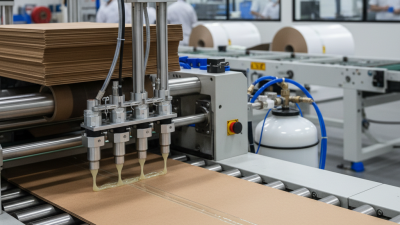
A full-automatic intelligent box making machine uses a full servo-driven system to coordinate feeding, positioning, folding, pressing, and forming with high precision. Servo-controlled motion reduces mechanical adjustment errors, while the intelligent HMI enables operators to complete digital settings, save customized parameters, and shorten setup time. Precise folding and pressing can reduce secondary finishing work, helping manufacturers improve output consistency and control labor costs. Rapid tooling changes also make the machine suitable for production environments with frequent order changes and varied packaging specifications.
By completing the main manufacturing process in one continuous cycle, this equipment supports high-speed and reliable box production. Its stable performance is well suited to folding cartons, specialty boxes, and other customized packaging formats, allowing factories to respond efficiently to changing market requirements while maintaining accurate dimensions and a professional finish.
FAQS
Record the dimensions as length, width, and height. Use the longest side, shorter side, then vertical side.
Measure inside space to check product fit. Measure outside dimensions for shipping space and dimensional weight.
Seal the box before measuring. Measure from outside edge to outside edge, including padding, raised flaps, and bulging panels.
Use a rigid measuring tape or ruler. Keep it straight and level. Do not press it into soft cardboard.
Packing paper, foam, and corner protection reduce space. The filled carton may also expand slightly.
Round up when the reading falls between marks. Use one unit, such as centimeters or inches, for every measurement.
Measuring only one side can create false assumptions. Forgetting padding is another common mistake. I made that mistake once.
Measure the sealed parcel twice on a flat surface. Record the larger readings, weigh the complete package, and check current size rules.
A photo can support accurate records. Show the tape touching each outer edge. It is useful when measurements may be questioned.
Recheck boxes with soft materials, uneven sides, or bulging panels. Measure again after sealing. It may feel excessive.
Conclusion
Accurately measuring Box Dimensions is essential for choosing the right shipping service and avoiding unexpected fees. Start by identifying the box’s length, width, and height, using the longest, second-longest, and shortest sides as the standard order. Measure from the exterior edges of the box, since shipping calculations are generally based on the space the package occupies. Place the measuring tool against flat, stable surfaces and avoid including empty space inside the package.
When measuring, account for flaps, seams, bulges, and any irregular sections that extend beyond the main box shape. For unusual packages, record the maximum exterior dimensions in each direction. Write the measurements in the unit required by the carrier, such as inches or centimeters, and keep the order consistent: length, width, then height. Finally, check each measurement a second time, confirm that the box is properly closed, and verify the recorded dimensions before selecting a shipping service.






 Phone
 Send Email
 whatsapp
 Facebook
 Youtube