A forming machine basically takes raw materials and shapes them into useful forms using pressure, heat, cutting, or controlled movements. The right kind of equipment can really improve consistency, cut down on manual handling, and help keep your production line on track. But here’s the thing—'forming' is a pretty broad term. For example, a metal stamping press and a paper box forming machine are worlds apart, solving very different problems.
In this guide, I’ll walk you through ten favorite types—like press brakes, roll forming machines, hydraulic presses, stamping presses, injection molding equipment, thermoformers, and paper box formers. Each one is suited for different materials, shapes, and production volumes. For instance, a press brake is great for bending sheet metal along specific lines, while a roll former gradually shapes a strip through a series of rollers. It's the little details that really matter—things like tooling, material thickness, cycle speed, accuracy, and how accessible the machine is for operators. A shiny spec sheet doesn’t always tell you about the real setup challenges.
If you’re buying globally, don’t just compare prices. Make sure to check things like machine capacity, control options, energy consumption, maintenance needs, availability of spare parts, and the quality of tech support from the supplier. It’s also smart to ask for references tailored to your specific application or see sample runs if possible. Double-check that the machine you choose will handle your materials and meet your product tolerance requirements. Since needs vary by factory and destination, it’s important to confirm safety and import rules with qualified local experts. A simple ranked list isn’t enough—do your homework! Plus, keep in mind that many machines overlap categories and manufacturers sometimes use different names for similar equipment. Think of this guide as a starting point—then really dig into what your production line actually needs before making a decision.
Forming machines reshape material through controlled pressure, heat, or repeated movement. They may bend sheet metal, press a molded part, or fold board around a rigid core. The method depends on the material, desired shape, and production volume. Small details matter.
A press brake bends metal along a chosen line, while a roll-forming line gradually shapes a strip through successive rollers. For packaging, a Rigid Box Forming Machine wraps paper or cloth around a firm board structure. Operators adjust tooling, pressure, and feed speed to reduce wrinkles, cracks, or uneven edges. Even a well-set machine can produce defects when material thickness varies. Real production runs reveal issues that a short trial may miss.
Tips: Test with the actual material before setting a full production schedule. Check finished parts for dimensions, surface marks, and consistent corners. Keep a record of settings that work, but review them after tooling changes. A useful setup is not always a perfect one.
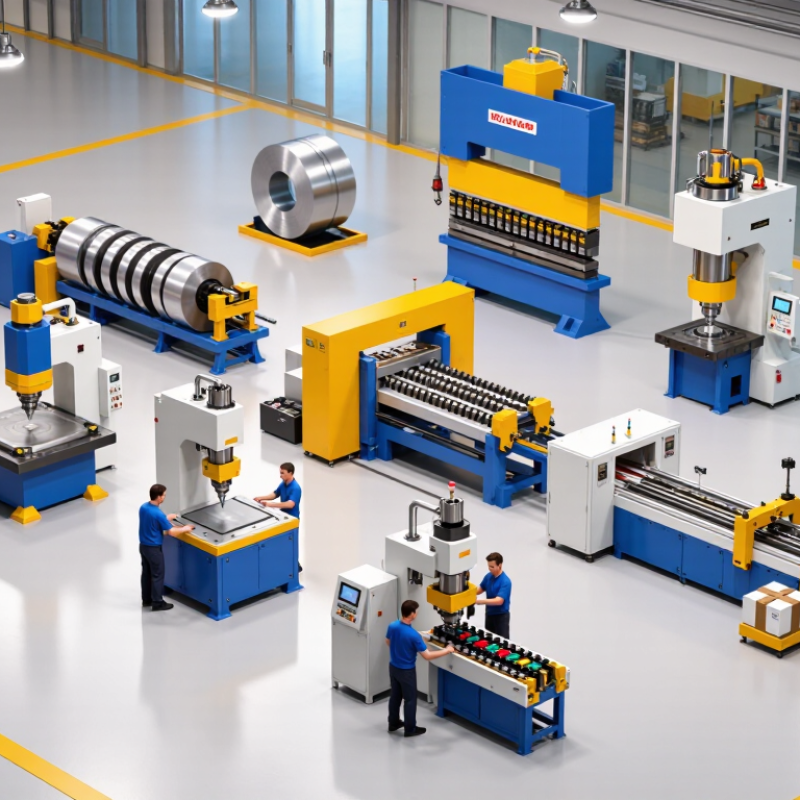
Forming machines differ by how they move material, not merely by press force. Stamping drives sheet metal into a die for repeatable parts at high production rates. Forging compresses a billet, often while hot, into a strong, compact shape. Extrusion pushes material through a shaped opening, making long profiles with a consistent cross-section. Roll forming bends sheet through successive rollers; press brakes make bends with more flexibility but usually slower cycle times. Hydroforming uses fluid pressure to shape hollow sections and complex contours.
The best fit depends on material, thickness, geometry, volume, and tooling cost. A thin panel for thousands of units may suit stamping; a structural bracket may justify forging. Extrusion works well for long rails, while roll forming can produce continuous channels with little scrap. Hydroforming can reduce seams, though tooling and setup may be costly. The categories blur on real production floors.
World Steel Association data report 1,882.6 million tonnes of crude steel production in 2024; International Aluminium Institute data put 2023 primary aluminium production at about 70.6 million tonnes. These figures show the scale of the materials involved, not a universal machine choice. Buyers should compare achievable tolerances, changeover time, and scrap rates using their own part drawings and trial runs. A machine’s advertised tonnage alone tells little.
Forming machines shape sheet metal, plastics, tubes, and packaging materials through controlled pressure, heat, or repeated passes. A press brake bends metal sheets into channels and enclosures; roll-forming machines create long, consistent profiles. Stamping presses make parts quickly with matched dies, while hydraulic presses provide steady force for deeper or more complex shapes. Mechanical presses suit rapid, repetitive operations. Setup matters.
Tube-bending machines form pipes around a die, and stretch-forming machines pull sheet material over a shaped tool. Vacuum-forming equipment draws heated plastic against a mold, while thermoforming systems heat and form plastic sheets using pressure or vacuum. An Automatic Rigid Box Forming Machine shapes wrapped board into firm packaging, with alignment and adhesive control affecting the finished corners. Small details count.
These ten types serve different production needs, not interchangeable jobs. Buyers should compare material thickness, part geometry, cycle rate, tooling changes, and operator access before choosing equipment. In practice, a sample run can reveal wrinkles, springback, or uneven edges that specifications may not show. I would not treat this list as a perfect ranking: machine names and capabilities can vary between suppliers, so confirm the working range and test the actual material.
A press brake shapes sheet steel or aluminum into brackets, cabinets, and panels; material thickness and bend radius guide tooling choices. Roll forming suits metal coils that become long sections, such as roofing profiles and framing rails. It works best for steady, repeated runs. Thermoforming heats plastic sheets for trays, packaging inserts, and appliance liners, while vacuum forming can produce larger covers and equipment housings.
Injection molding turns plastic pellets into detailed parts, from closures to small housings. Blow molding forms hollow containers from heated plastic, including bottles and tanks. Compression molding is suited to rubber compounds and composite sheets used in seals, electrical parts, and panels. Forging presses heated metal billets into strong components such as shafts and connecting pieces. Wire forming bends metal wire into springs, clips, and racks. The fit is not always tidy. Material grade and part geometry can change the choice.
An Industrial Rigid Box Forming Machine processes paperboard and wrapped board for presentation boxes, gift boxes, and premium packaging. Board thickness, corner construction, and surface wrap affect forming quality. A stiff board may hold its shape well but resist tight folds. Buyers should compare sample parts, changeover needs, and expected production volume before choosing. Catalog descriptions rarely show every limitation. A trial run can reveal them.
Common feedstock formats matched to each machine type
A colored bar indicates a commonly processed feedstock, not an exclusive capability or a machine-performance rating. Typical examples include sheet-metal panels from stamping presses, formed tubes from hydroforming presses, forged components from forging presses, molded parts from injection or blow molding machines, and packaging trays from thermoforming machines. Tooling, material grade, and machine configuration affect suitability.
A forming machine’s rated tonnage is only a starting point. A stamping press may deliver high force at speed, while a press brake’s useful capacity depends on material thickness, bend length, and tooling. Roll-forming lines favor repeatable long profiles, but changeovers can add cost. Compare usable output per shift, not headline capacity.
Precision needs a common test basis. ISO 230-1:2012 describes geometric accuracy tests for machine tools; confirm its applicability and request documented acceptance tests for the machine under review. Ask suppliers to demonstrate the actual part: measure springback, dimensional variation, and scrap across a realistic production run. Small details matter. A machine that holds tolerance on one sample may drift after a tooling change.
Cost comparisons should include tooling, setup labor, energy, maintenance, and downtime, alongside purchase price. The International Federation of Robotics’ World Robotics 2024 report counted 4,281,585 industrial robots operating worldwide in 2023, with 541,302 newly installed that year. That scale signals the growing relevance of automation, but it does not prove an automated forming line will pay back for every buyer. Robot integration can raise initial cost and floor-space needs; estimate payback using your own cycle time and labor data. Estimates are imperfect, especially when product mix changes.
A forming machine should meet the buyer’s production needs and the standards required at its destination. ISO 9001:2015 can help buyers assess a supplier’s quality-management processes, but it does not certify a machine’s output or safety. Ask for the applicable conformity documents, electrical drawings, guarding details, and a clear list of exclusions. Check that the machine’s rated speed matches the material thickness and tooling in your actual production plan. Paperwork matters. So does a realistic acceptance test.
Service is part of the purchase, not an afterthought. Deloitte and MAPI’s 2024 Smart Manufacturing Survey found that 92% of surveyed manufacturers expect smart manufacturing to drive competitiveness within three years. That shift makes software updates, controls expertise, and remote troubleshooting increasingly relevant. Before ordering a Box Forming Machine, confirm response times, spare-parts availability, operator training, and whether technicians can support your time zone. Request a sample maintenance schedule. Ask who pays for travel.
A factory visit or live video inspection can reveal details a brochure misses: tool-change access, guarding clearance, and how scrap exits the machine. Test with your own material where possible, then record cycle time, changeover steps, and defect limits in the acceptance plan. Be cautious with promises of “plug-and-play.” Installation conditions vary, and buyers sometimes underestimate training time. I would still leave room for uncertainty: one successful test run cannot prove long-term reliability.
| Forming machine type | Typical processes and materials | Key sizing considerations | Standards and compliance to verify | Global service and support checks |
|---|---|---|---|---|
| Hydraulic press | Deep drawing, compression, forming, and straightening of sheet metal, composites, and other materials. | Required force, daylight, stroke, bed size, speed, and production cycle. | Check ISO 16092-1 and the applicable press-specific part, ISO 12100, IEC 60204-1, and destination-market rules. | Confirm hydraulic schematics, oil and filter specifications, spare-parts availability, training, and troubleshooting response times. |
| Mechanical stamping press | High-speed blanking, punching, and stamping of sheet-metal parts using dies. | Rated force at the working position, strokes per minute, bed and bolster dimensions, and die protection needs. | Check ISO 16092-1 and ISO 16092-2 where applicable, plus ISO 12100 and local safeguarding requirements. | Review clutch and brake maintenance requirements, die-setting support, guarding documentation, and availability of critical components. |
| Servo press | Precision stamping and forming where adjustable slide motion and controlled process profiles are useful. | Force, programmable motion profile, stroke, cycle rate, repeatability, and energy requirements. | Verify applicable press-safety requirements, ISO 12100, IEC 60204-1, and safety-control performance requirements for the installation. | Ask about drive-system diagnostics, software backups, remote support access, operator training, and replacement-drive lead times. |
| Press brake | Bending sheet and plate into channels, boxes, brackets, and other profiles. | Bending length, material thickness and strength, tooling, required force, backgauge, and part geometry. | Check current press-brake safety standards applicable in the destination market, along with ISO 12100 and electrical and control-system requirements. | Confirm tooling compatibility, control-system training, alignment services, installation support, and access to authorized technicians. |
| Roll forming machine | Continuous forming of coil-fed metal into repeatable profiles such as channels, panels, and structural sections. | Coil width and thickness, material strength, profile geometry, line speed, and cut-off method. | Verify machinery risk assessment, electrical safety, guarding, emergency stops, and applicable local machinery regulations. | Request roll drawings, setup guidance, changeover training, wear-part lists, and support for commissioning the complete line. |
| CNC turret punch press | Punching and nibbling patterns in sheet metal with a selectable tool turret. | Sheet size, thickness, punching force, tool stations, part accuracy, and required automation. | Check applicable press and machinery safety standards, ISO 12100, electrical requirements, and guarding provisions for automated loading. | Check programming-file compatibility, tooling availability, software updates, remote diagnostics, and operator training options. |
| Tube and pipe bending machine | Cold bending of round, square, or rectangular tubing and pipe for frames, fluid systems, and structural assemblies. | Outside diameter, wall thickness, bend radius, material, bend angle, and allowable deformation. | Verify general machinery and electrical safety requirements, guarding, and any product-specific rules for the intended application. | Confirm bend-program support, tooling supply, setup procedures, calibration assistance, and availability of service in the buyer's region. |
| Metal spinning machine | Rotational forming of sheet or blanks into axisymmetric components, commonly using ductile metals. | Blank diameter, material and thickness, finished-part shape, spindle speed, and manual or CNC operation. | Assess machine guarding, risk controls, electrical safety, and the safety requirements applicable in the installation country. | Ask for tooling and process-development assistance, maintenance instructions, training, and access to replacement controls and components. |
| Stretch forming machine | Forming sheet or profiles over a die while applying controlled tension, often for large curved components. | Part dimensions, material behavior, required forming force, clamping arrangement, and tooling envelope. | Verify risk assessment, hydraulic and electrical safety, guarding, and applicable regional conformity requirements. | Review die-design support, hydraulic maintenance guidance, installation requirements, and service capability for a large custom machine. |
| Forging press | Hot or cold forging of metal billets and preforms into dense components such as shafts, fittings, and tools. | Forging force, workpiece size and temperature, die dimensions, production rate, and heating-system integration. | Check applicable press-safety standards, ISO 12100, electrical and control safety, and additional site requirements for heat and material handling. | Confirm commissioning and foundation requirements, planned maintenance, die-change support, training, and access to high-wear spare parts. |
Standards and conformity requirements vary by machine configuration and destination market. Confirm the current applicable editions, required documentation, and certification or assessment route before purchase.
PMMI’s 2024 State of the Industry Report underscores the growing importance of automation, reliable equipment, and adaptable production processes in packaging and manufacturing. For adhesive assembly lines, automation can help maintain consistent application, reduce repetitive manual tasks, and support smoother changeovers as product and material requirements shift. Equipment that combines straightforward controls with dependable feeding and laminating functions can help manufacturers improve workflow without making routine operation unnecessarily complex.
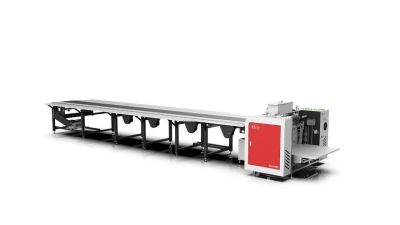
The DH-850 feeder laminating machine is designed to support these priorities with a dual-roller system for even adhesive application across different face papers. Its patented feeding technology helps prevent double-sheet feeding, while a one-touch lifting worktable and quick-change press rollers simplify adjustments. Operators can select single- or double-roller operation and use one-button controls for starting, stopping, and clearing material. The machine accommodates white glue, jelly glue, and multiple paper types, offering flexibility for varied production needs. By bringing feeding, adhesive application, and pressing into a coordinated process, the DH-850 can help create a stable, efficient assembly line and make model changeovers more convenient.
Stamping presses sheet metal into a die for repeatable, high-volume parts. Forging compresses a billet, often while hot, into a compact shape. Strong, but tooling matters.
Use extrusion for long parts with a consistent cross-section, such as rails. Material passes through a shaped opening. Not for every shape.
Roll forming bends sheet through successive rollers and suits continuous channels. A press brake offers more flexible bends, usually with slower cycles.
It shapes hollow sections and complex contours with fluid pressure. It can reduce seams, but setup and tooling may cost more.
Compare material, thickness, geometry, production volume, tooling costs, tolerances, changeover time, and scrap rates. Use part drawings and trial runs. Tonnage alone misleads.
Request applicable conformity documents, electrical drawings, guarding details, and a list of exclusions. Check rated speed against actual material thickness and tooling. Paperwork matters.
Confirm response times, spare-parts availability, operator training, software support, and technician coverage for your time zone. Ask about travel costs, too.
Test with your own material when possible. Record cycle time, tool-change steps, and defect limits. One good run cannot prove long-term reliability.
Forming machines transform raw materials into useful shapes through controlled pressure, heat, bending, drawing, or compression. Different processes suit different production goals, from shaping sheet metal and profiles to forming plastic, wire, and other materials. This overview introduces ten common machine types and explains how their operating methods, capabilities, and applications differ. It also considers which materials and finished products are best matched to each machine, helping readers connect production needs with an appropriate Forming Machine.
For buyers, choosing equipment involves more than comparing purchase prices. Key considerations include capacity, accuracy, operating speed, tooling needs, maintenance, and overall production costs. Global purchasing also calls for attention to relevant technical standards, installation requirements, spare-parts availability, training, and dependable after-sales support. By weighing these practical factors alongside the intended materials and products, manufacturers can make informed equipment decisions and build efficient, reliable production processes.