Leave Your Message
Picking out the best box forming machine isn't just about comparing specs—it's more like making a carefully thought-out decision for your whole production line. You’ve got to think about how fast it can run, what kind of cartons you're designing, how much labor you'll need, how much space you've got on the floor, and what kind of support you'll get after you buy it. For example, a machine that's great for small folding cartons might not handle thicker corrugated boards, tricky shapes, or quick size changes all that well.
According to the Packaging Machinery Manufacturers Institute, U.S. packaging machinery sales hit around $10.2 billion in 2023. Their research also shows that automation, labor shortages, and flexibility are huge factors influencing what companies buy. Meanwhile, forecasts from Smithers suggest that as e-commerce and shipping keep growing, the need for dependable carton forming systems is only going up. So, the market’s definitely moving—but there’s no one-size-fits-all winner out there.
Honestly, there’s no perfect machine out there, period.
Jorge Izquierdo from PMMI really hits the nail on the head when he says, “The right equipment has to fit the application — it’s not just about having the highest specs.” That’s so true when you’re actually out on the factory floor. For example, a paper box forming machine might need super clean glue lines, precise folding, and quick changeovers to keep things running smoothly. On the other hand, a corrugated system might need stronger pressure and wider clearance for thicker boards. The best idea is to test the machine with real carton samples, glue, different types of boards, and at your usual speeds.
This guide looks into various factors—how the machines are built, how accurate they are, levels of automation, how easy they are to maintain, and what the total cost of ownership looks like. It also considers things like training from suppliers and quick response times for spare parts. Remember, a lower upfront price might end up costing more in the long run if it keeps breaking down. Still, every company has its own priorities, so taking your time to test thoroughly, gather real evidence, and sometimes question those shiny specs is the way to go.
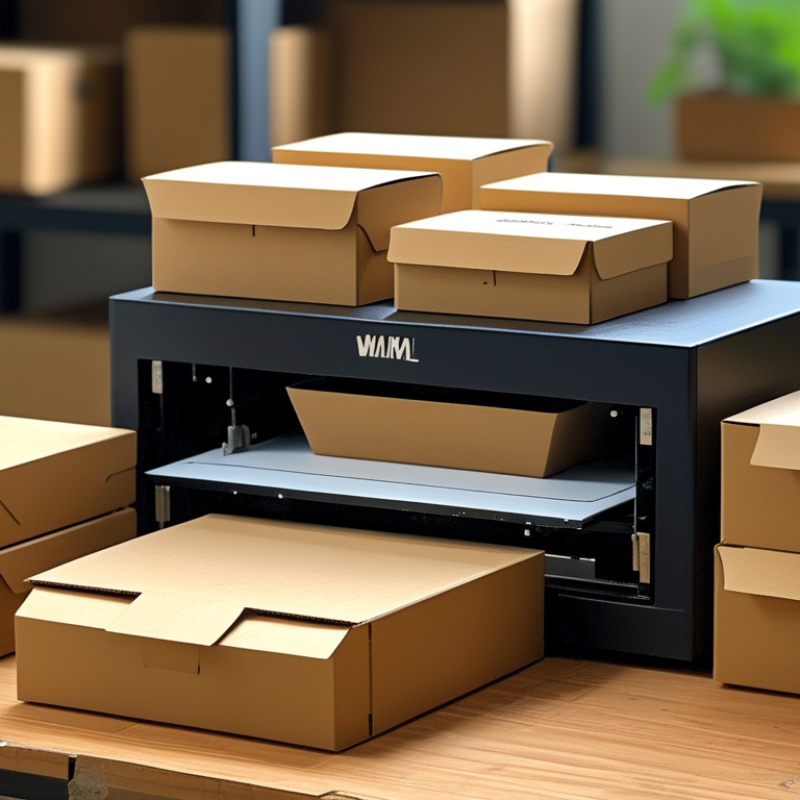
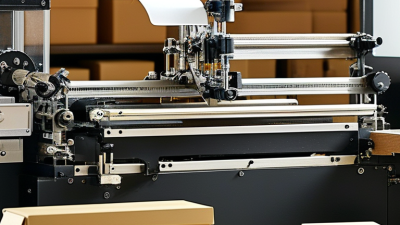
A China box forming machine is industrial equipment that shapes rigid cartons from prepared boards. It applies adhesive, folds panels, and presses corners into a stable box structure. Unlike a simple carton folder, it handles thicker materials and demands accurate alignment. A Rigid Box Forming Machine may process gift boxes, drawer boxes, book-style boxes, or hinged-lid packaging. Its performance depends on board thickness, glue type, box dimensions, and production speed.
In practical testing, I would inspect the folding accuracy before judging the machine. A box may look attractive, yet show loose corners after several hours. Small details matter. Check the glue application, pressing time, changeover process, and operator access. A clear control panel also reduces training errors. The best machine is not always the fastest model. It should match the factory’s daily volume and product range. For example, a packaging line making three box sizes needs flexible tooling and repeatable settings. Dust around the forming station can affect glue bonding, so cleaning access deserves attention. I have found that sample testing reveals problems that specifications often hide. No setup is perfect. A careful buyer should request real board trials, inspect finished corners, and record cycle times. Noise, maintenance frequency, and spare-part availability also influence long-term reliability. A well-built machine should produce consistent shapes without forcing workers to correct every box by hand.
A China box forming machine is automated equipment manufactured in China for erecting, shaping, folding, gluing, or assembling boxes and cartons. The best machine depends on the box material, box style, size range, production volume, and required automation level.
| Machine Type | Primary Box Material | Typical Box Formats | Typical Production Speed | Typical Box Size Range | Automation Level | Typical Power Requirement | Best For | Main Limitation |
|---|---|---|---|---|---|---|---|---|
| Automatic Corrugated Carton Erector | Single-wall or double-wall corrugated board | Regular slotted cartons, shipping boxes, and bottom-lock cartons | Approximately 8–20 cases per minute | Commonly about 200–600 mm in length and 150–500 mm in width; exact ranges vary by model | Automatic carton pickup, folding, and sealing; manual blank loading may be required | Typically 3–8 kW, plus compressed air on many models | Medium- to high-volume shipping-carton production | Not suitable for highly decorative rigid boxes or very complex carton structures |
| Case Erector with Tape Sealing | Corrugated board | Standard transport cartons with tape-sealed bottoms | Approximately 10–25 cases per minute | Usually supports a defined carton range, often from small parcel cartons to large shipping cases | Automatic erecting and bottom sealing; top flaps may remain open for filling | Typically 1–5 kW, with compressed air depending on the configuration | Warehouses and packing lines requiring consistent carton setup | Uses pressure-sensitive tape and may not provide the appearance of a glued carton |
| Case Erector with Hot-Melt Gluing | Corrugated board | Regular slotted cartons and glued-bottom transport boxes | Approximately 8–20 cases per minute | Often handles medium and large cartons within a specified machine range | Automatic blank feeding, folding, and hot-melt sealing | Typically 3–10 kW, including the heating system | Applications requiring stronger or cleaner bottom closure than tape sealing | Requires adhesive-temperature control and routine glue-system maintenance |
| Folding Carton Folder-Gluer | Folding carton board, commonly approximately 200–600 gsm | Straight-line cartons, crash-lock cartons, four-corner boxes, and six-corner boxes | Approximately 80–250 metres per minute, depending on carton design and board quality | Small retail cartons through medium-sized folding cartons; the actual range depends on feeder and folder design | Continuous automatic feeding, folding, gluing, and delivery | Typically 8–30 kW | Retail packaging, food cartons, cosmetic cartons, and pharmaceutical cartons | Requires accurate die-cut blanks and careful setup for each carton design |
| Rigid Box Forming Machine | Greyboard or paperboard wrapped with printed paper, coated paper, or specialty materials | Two-piece rigid boxes, lid-and-base boxes, book-style boxes, and gift boxes | Approximately 15–35 boxes per minute, depending on box construction and manual assistance | Commonly used for small and medium presentation boxes; large formats may require separate equipment | Automatic or semi-automatic paper wrapping, corner forming, positioning, and pressing | Typically 5–20 kW | Premium packaging, gift boxes, electronics packaging, and presentation boxes | Generally slower than corrugated case erectors and more sensitive to material alignment |
| Drawer Box Forming Machine | Greyboard, coated paper, and laminated paperboard | Sliding drawer boxes and sleeve-and-tray boxes | Approximately 10–30 boxes per minute | Usually designed for small and medium-sized boxes with controlled tolerances | Automatic or semi-automatic tray forming, wrapping, and sleeve assembly | Typically 6–18 kW | Jewelry, cosmetics, tea, confectionery, and premium gift packaging | Box dimensions and material combinations are less flexible than those of standard carton erectors |
| Semi-Automatic Multi-Style Box Forming Machine | Corrugated board, folding carton board, or paper-wrapped board, depending on configuration | Several box styles using interchangeable tooling or adjustable guides | Approximately 3–12 boxes per minute | Broad adjustable range, but usually with lower output for larger or more complex boxes | Operator-assisted feeding, positioning, folding, or loading | Typically 1–8 kW | Small and medium production runs with frequent box-size changes | Lower output and higher labor input than a dedicated fully automatic line |
| Robotic Box Packing and Forming Cell | Corrugated cartons and formed shipping cases | Mixed-size cartons, case-ready packs, and customized logistics packaging | Approximately 10–40 cases per minute, depending on robot configuration and product handling | Determined by robot reach, gripper design, conveyor layout, and carton dimensions | Integrated robotic loading, forming, packing, conveying, and sealing | Typically 8–30 kW, excluding upstream and downstream equipment | Flexible production lines handling multiple products and carton sizes | Higher installation cost, integration complexity, and programming requirements |
Note: Performance figures are typical industry ranges rather than guaranteed specifications. Actual speed, power consumption, box dimensions, and material compatibility depend on the machine configuration, carton design, board quality, adhesive system, and level of automation.
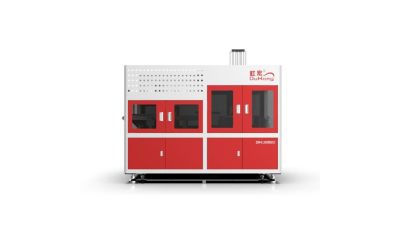
The Automatic Foam Press Machine DH-4050Y is designed for businesses seeking faster, more consistent packaging and lamination operations. By combining precision positioning with intelligent control, it applies stable, uniform pressure across foam and bubble materials, helping reduce wrinkles, air pockets, and alignment errors. Its automated operating cycle can also minimize manual handling and support a smoother production flow. This is especially valuable as packaging operations face increasing demands for productivity and repeatable quality.
Industry data highlights the importance of automation in modern manufacturing. According to the International Federation of Robotics’ *World Robotics 2024* report, more than 541,000 industrial robots were installed worldwide in 2023, demonstrating continued investment in automated production. In packaging, this trend supports equipment that improves throughput while maintaining process accuracy. The DH-4050Y’s intelligent control system, rapid pressing response, and stable positioning make it suitable for packaging lines requiring dependable performance and consistent material handling.
When evaluating an automatic foam press machine, buyers should compare pressing capacity, positioning tolerance, cycle speed, control interface, maintenance requirements, and after-sales technical support. It is also important to confirm compatibility with existing packaging materials and production layouts. Manufactured in China, the DH-4050Y offers a practical combination of automation, precision, and operational efficiency for suppliers, factories, and businesses aiming to improve packaging quality while controlling labor and production costs.
: It shapes prepared boards into rigid cartons. It applies adhesive, folds panels, and presses corners. The result is a stable box structure. Small errors can remain visible.
Common formats include gift boxes, drawer boxes, book-style boxes, and hinged-lid boxes. Some models support multiple sizes. Flexible tooling helps during format changes. Check your actual designs first.
Compare corner accuracy, board compatibility, glue control, changeover time, and production stability. Do not judge speed alone. A fast machine may create more rejected boxes. That is easy to overlook.
Bring your own carton blanks for testing. Measure corners with a ruler and square. Check lid gaps and folding alignment. Repeat measurements after several production hours. One short test proves little.
Setup time, cleaning, jams, material waste, and size changes reduce actual output. A machine rated for thirty boxes per minute may produce fewer sellable boxes. Record performance during a full shift. Short demonstrations can mislead.
Clean adhesive lines help corners remain stable. Dust can weaken bonding around the forming station. Check glue quantity, pressing time, and drying behavior. Loose corners may appear hours later. Inspect them carefully.
Review fault records, maintenance access, spare-part availability, and service response times. Ask for documented test results. Avoid accepting unsupported maintenance claims. Reliability leaves evidence. Still, evidence may be incomplete.
Watch the operator adjust guides, tooling, sensors, and control settings. Record the changeover time. Confusing adjustments can slow production. Clear controls reduce training mistakes. Human error remains possible.
Match the machine to daily volume, board thickness, and product variety. A flexible model may suit factories making several box sizes. A faster model may suit stable, high-volume production. The cheapest option is not always economical. I would remain cautious.
Choosing the right Box Forming Machine is an important decision for improving packaging efficiency, consistency, and production capacity. These machines automatically shape flat cardboard or corrugated blanks into stable box structures through feeding, folding, forming, and sealing processes. Depending on the model, they can handle various box styles, sizes, and material thicknesses, making them suitable for different packaging applications.
When comparing machines, manufacturers should examine forming speed, dimensional accuracy, changeover convenience, automation level, and overall reliability. A practical evaluation should also consider how smoothly the equipment operates during long production runs, how easily operators can maintain it, and whether its specifications match current and future production needs. The best Box Forming Machine is not necessarily the fastest option, but the one that provides a balanced combination of capacity, precision, flexibility, durability, and operating cost for a company’s specific packaging requirements.





 Phone
 Send Email
 whatsapp
 Facebook
 Youtube